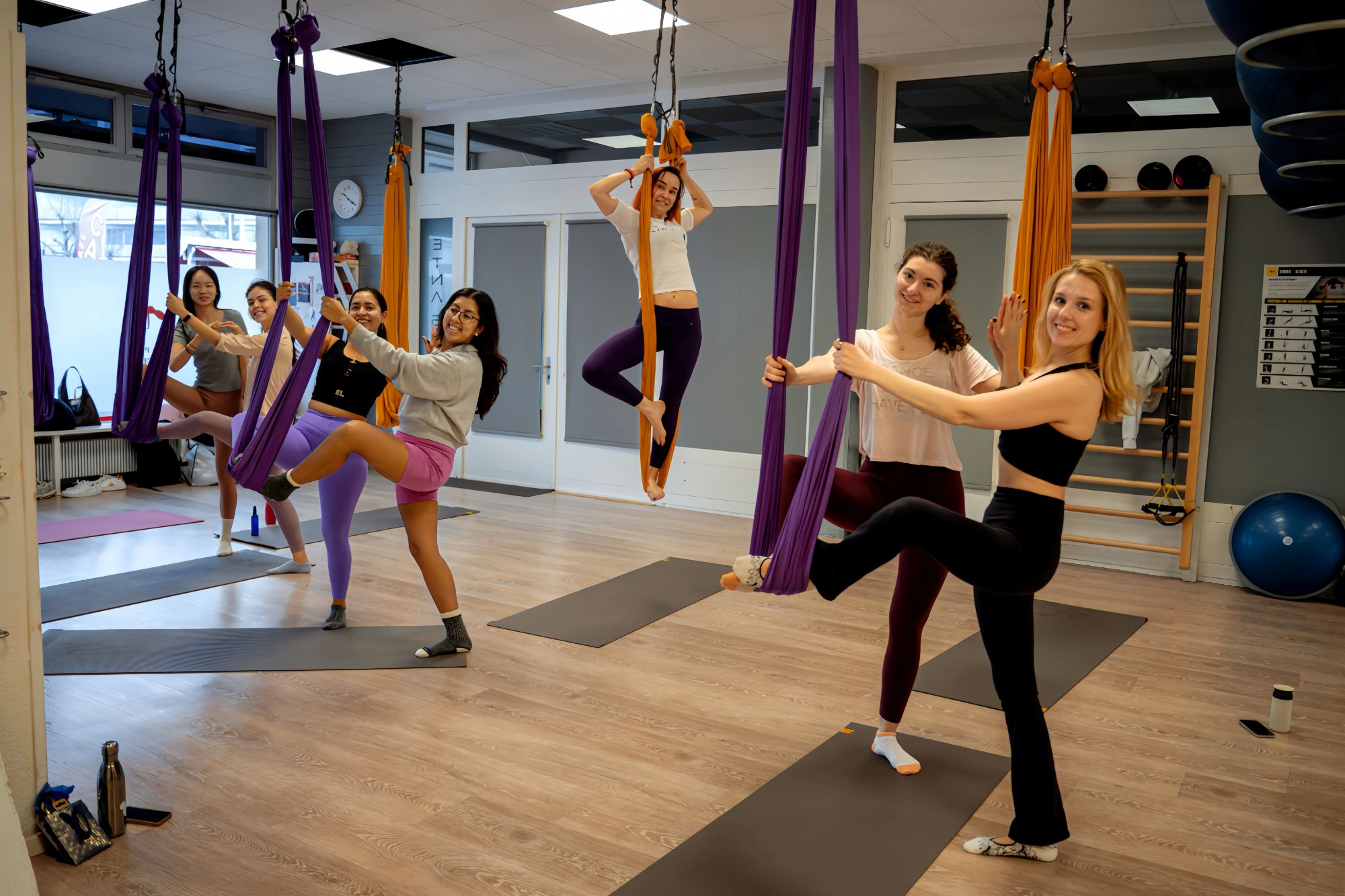
Why Some People Love Aerial Yoga Instantly (and Others Don’t)

Aerial yoga is one of those practices people tend to feel very strongly about.
Some fall in love after the first class — feeling light, relaxed, and surprisingly strong.
Others step out thinking: “That was uncomfortable… I’m not sure it’s for me.”
So what’s going on?
If aerial yoga is so beneficial, why do people experience it so differently?
Let’s explore the real reasons behind these reactions — and what they say about your body, your mind, and your movement habits.
1. Your Body Is Used to Different Types of Movement
If you come from:
- yoga
- dance
- mobility-based training
…you’ll likely adapt quickly to aerial yoga.
But if your background is more:
- weight training
- running
- high-intensity workouts
The hammock can feel unstable, unfamiliar, and even frustrating at first.
Aerial yoga challenges:
- coordination
- control in space
- smaller stabilizing muscles
So your experience depends a lot on what your body is already used to.
2. The Hammock Creates New Sensations
Aerial yoga introduces something most workouts don’t: pressure from the fabric.
The hammock wraps, supports, and presses into the body — especially around:
- hips
- waist
- thighs
For some people, this feels:
- grounding
- supportive
- even comforting
For others, it feels:
- intense
- strange
- slightly uncomfortable
This alone can shape your entire first impression.
3. Your Nervous System Plays a Big Role

Not all reactions are physical — many are neurological.
If your nervous system is:
- open and relaxed → you may enjoy the sensation quickly
- sensitive or stressed → new inputs may feel overwhelming
Being slightly off the ground, upside down, or wrapped in fabric can trigger different responses:
- excitement
- curiosity
- resistance
This is completely normal.
Over time, aerial yoga can actually help regulate your nervous system — but the first class can feel like a lot.
4. Control vs Letting Go
Some people naturally enjoy control in their movement.
Aerial yoga asks you to:
- trust the fabric
- release unnecessary tension
- move in a less predictable environment
If you love structure and control, this can feel challenging.
If you enjoy exploration and flow, it can feel freeing.
Neither is better — just different starting points.
5. Expectations vs Reality
Many people come to aerial yoga expecting:
- something easy and relaxing
- or something acrobatic and impressive
The reality is often somewhere in between:
- controlled strength
- deep release
- unfamiliar sensations
If expectations don’t match the experience, it can affect how much someone enjoys the class.
6. Some Benefits Take Time to Feel
Unlike quick, high-intensity workouts, aerial yoga works in a more subtle and long-term way.
The biggest benefits often show up after a few sessions:
- improved mobility
- less tension
- better body awareness
- a calmer nervous system
So while some people feel amazing immediately, others need a few classes to truly experience the difference.
So… Is Aerial Yoga for Everyone?

Not everyone will love it instantly — and that’s okay.
But many people who feel unsure at first often say later:
👉 “I didn’t like my first class… but now I love it.”
Why?
Because aerial yoga:
- teaches your body something new
- challenges привычные patterns (habitual patterns)
- invites you to move differently
And that takes time.
What If You Didn’t Love Your First Class?
Instead of deciding immediately, try this:
- Give it 2–3 sessions
- Focus on breathing and slowing down
- Stay curious rather than critical
Your body may just need time to understand the experience.
The Takeaway
Aerial yoga isn’t just a workout — it’s a new sensory and movement experience.
Whether you love it instantly or need time to adapt depends on:
- your movement background
- your nervous system
- your expectations
- your openness to new sensations
✨ There’s no “right” reaction — only your starting point.
If you’ve tried aerial yoga, which side were you on?
Loved it instantly… or needed time to grow into it?
(You might be surprised how many people share your experience.)