Why Aerial Yoga Is Safer Than You Think: Injury Myths Explained
When people see aerial yoga for the first time, the reaction is often the same:
“That looks amazing… but also a little dangerous.”
Hanging from a fabric hammock several feet above the floor may appear intimidating, especially if you’re new to yoga or movement practices. Many beginners worry about falling, straining muscles, or getting stuck upside down.
But here’s the surprising truth:
Aerial yoga is often safer than many traditional fitness practices when taught correctly.
Let’s explore the most common injury myths about aerial yoga—and what actually happens in a well-guided class.
Myth #1: “You Can Easily Fall From the Hammock”
This is the most common fear beginners express.
In reality, falling from the hammock is extremely unlikely in a properly structured class.
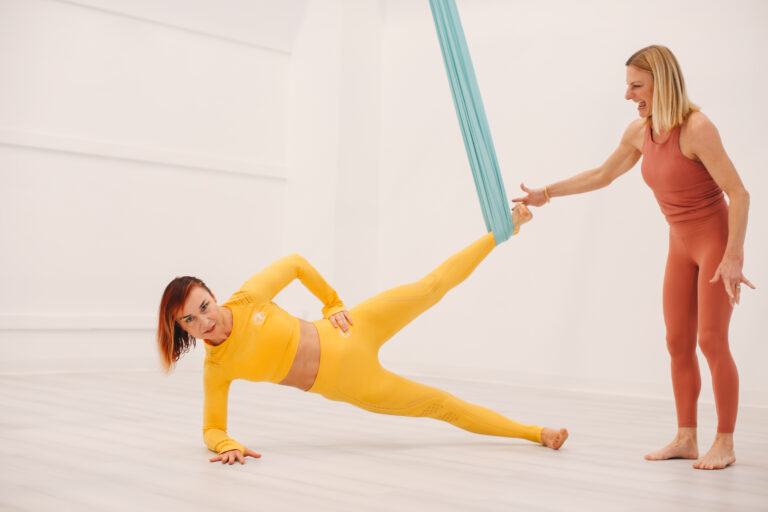
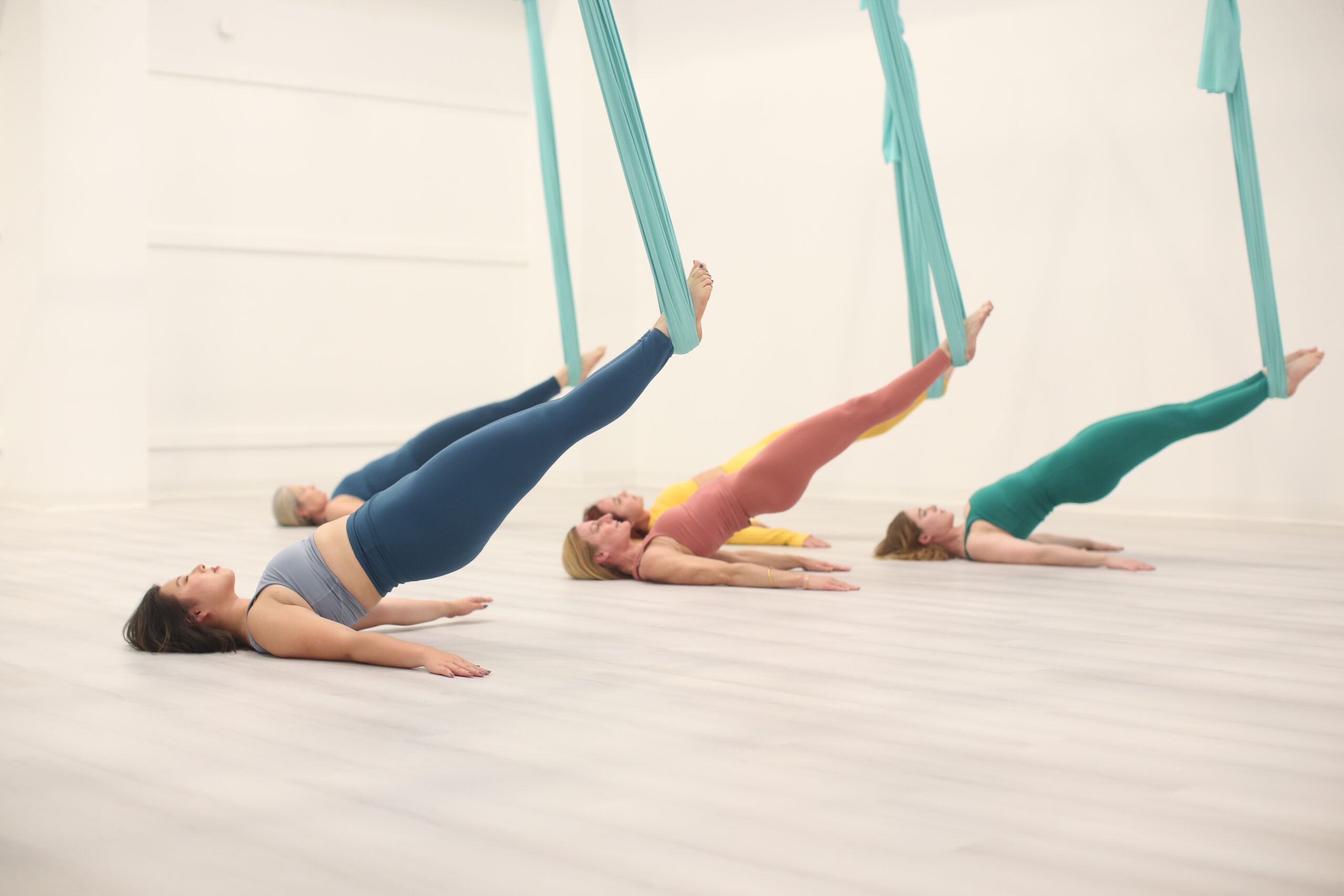
The aerial hammock is designed to wrap, support, and stabilize the body. Unlike balance poses on the floor where gravity can easily pull you off center, the fabric often provides three or more points of support.
In many poses, the hammock acts like a safety harness, holding part of your body weight.
Experienced instructors also teach:
1.Safe ways to enter and exit poses
2. How to test the hammock before committing weight
3. Gradual progressions for inversions
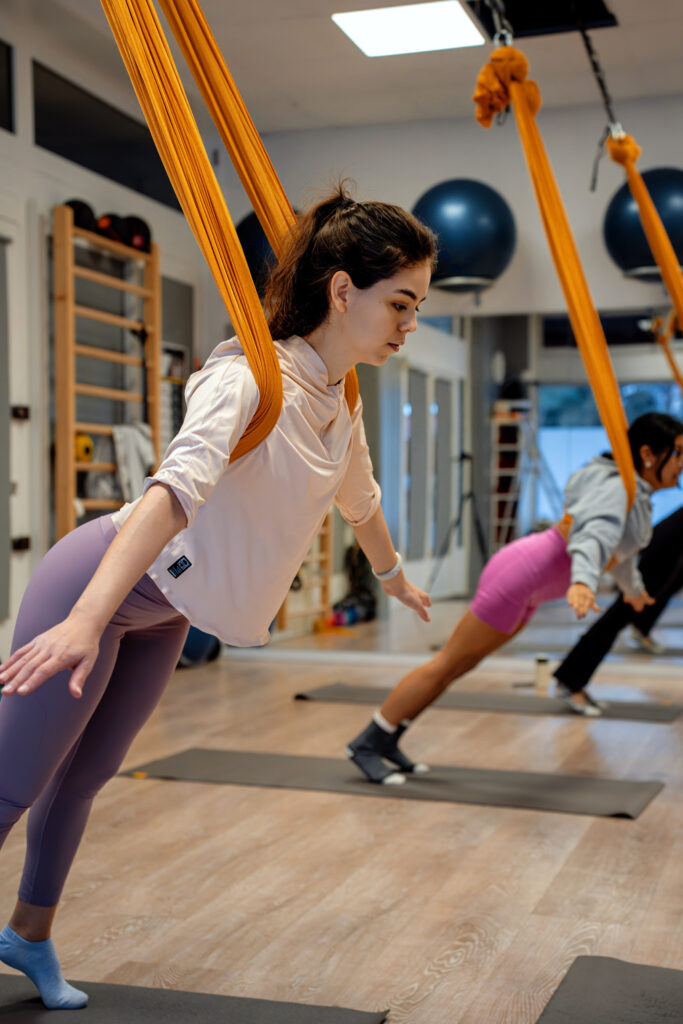
Beginners usually stay low to the ground while learning basic techniques.
In other words, the goal is not to perform circus tricks — it’s to build trust, awareness, and control step by step.
Myth #2: “Inversions Are Dangerous for Beginners”
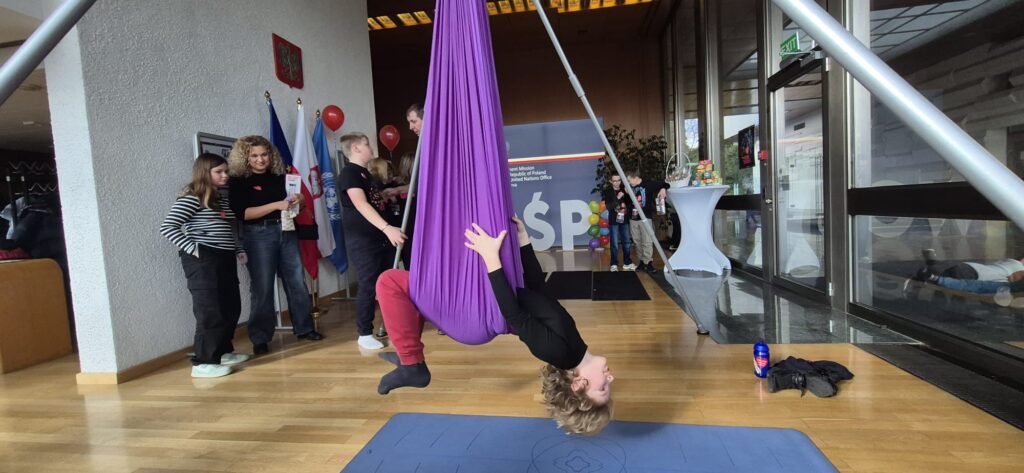
Seeing someone hanging upside down can make aerial yoga look extreme.
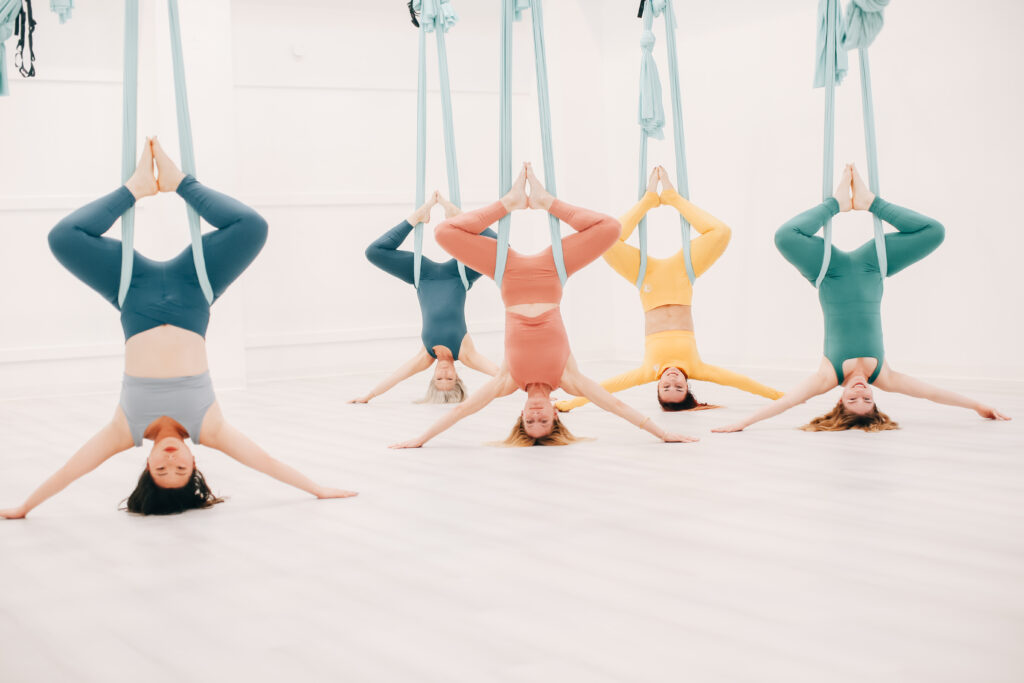
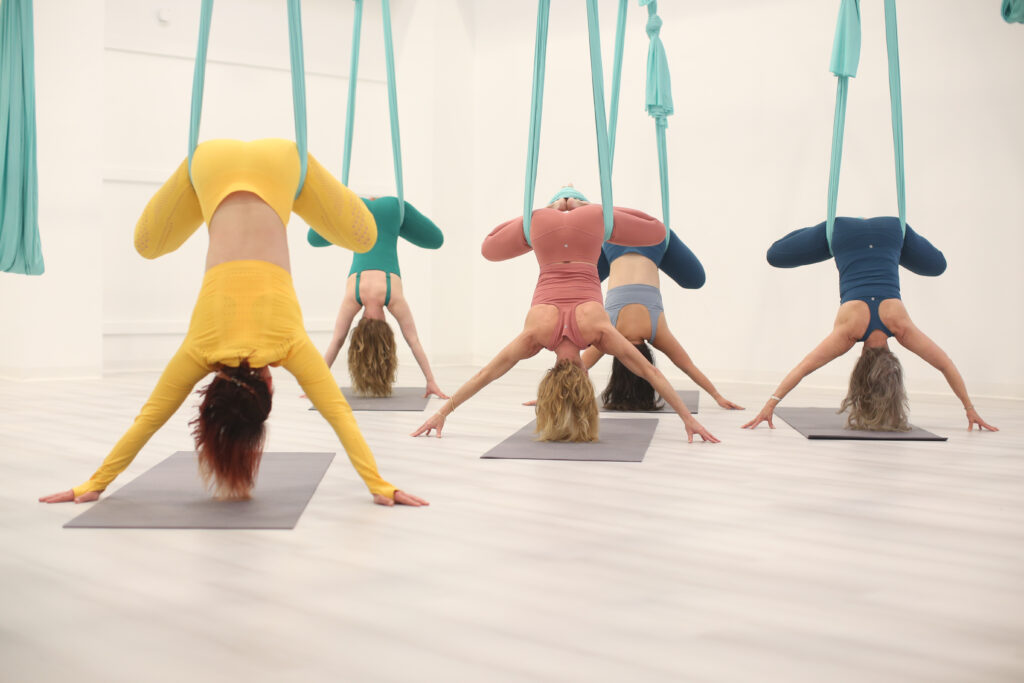
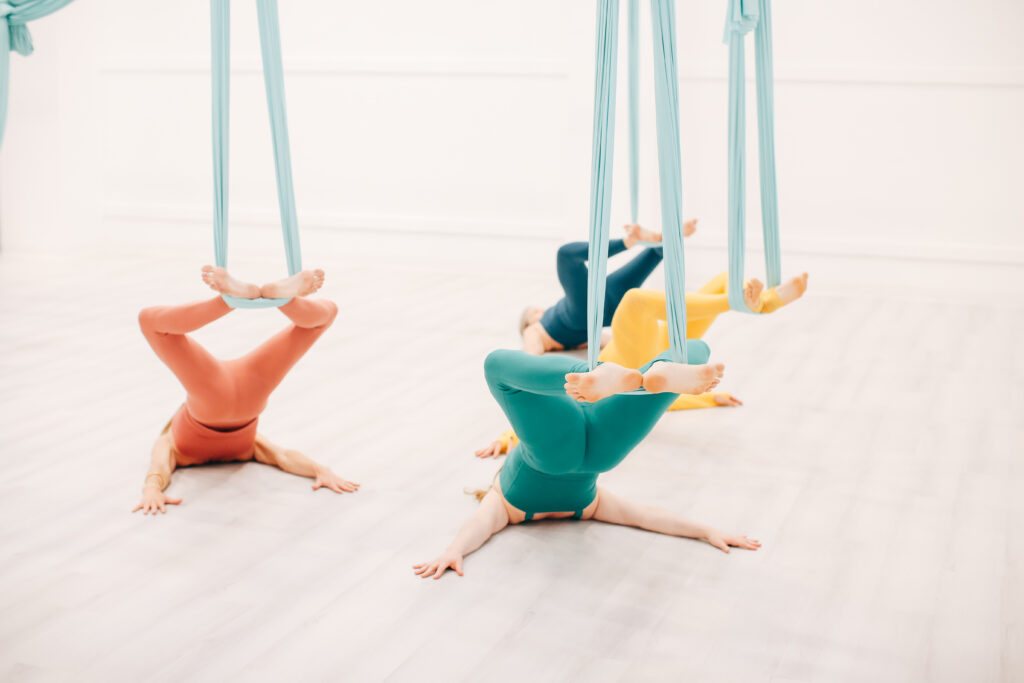
But inversions in aerial yoga are often more accessible and safer than floor inversions.
Why?
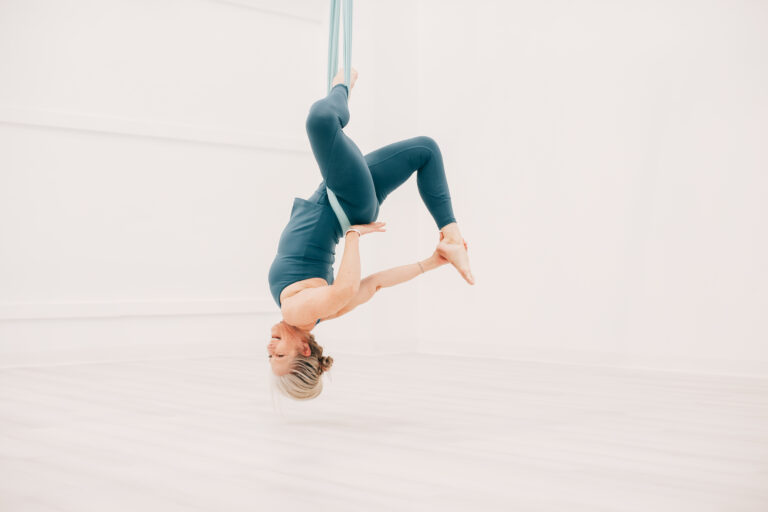
Because the hammock supports the pelvis and spine, reducing pressure on the neck and shoulders.
For example, in traditional yoga poses like headstand or shoulder stand, the body must support significant weight through the cervical spine or shoulders.
In aerial yoga, the hammock redistributes weight through the hips and fabric, allowing the spine to decompress naturally.
Many students actually experience:
- relief from spinal compression
- reduced lower back tension
- improved posture
Of course, inversions are always optional, and qualified instructors provide alternatives for those who prefer to stay upright
Myth #3: “You Need Strength and Flexibility to Avoid Injury”
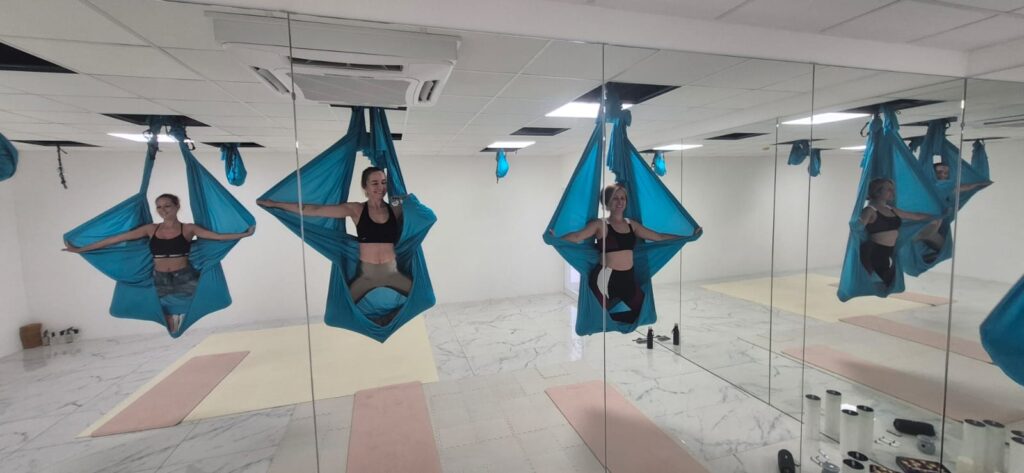
Another misconception is that aerial yoga is only safe for athletic or highly flexible people.
In fact, the hammock often makes movements more accessible.
The fabric acts as:
- a support system
- a balance aid
- a tool for controlled stretching
For example, the hammock can help students gradually deepen stretches without forcing joints or ligaments.
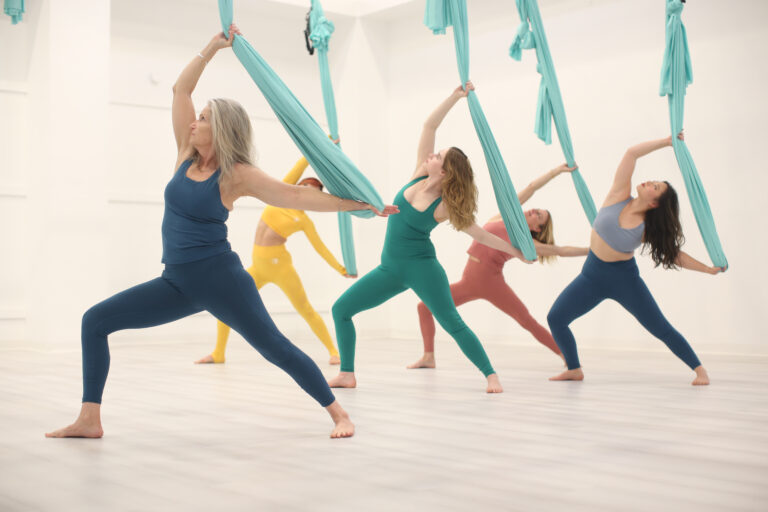
It also allows beginners to build strength progressively, since part of the body weight can remain supported by the fabric.
This means many students who struggle with traditional yoga find aerial yoga more comfortable and safer for their bodies.
Myth #4: “Aerial Yoga Causes More Injuries Than Regular Yoga”
Studies of yoga injuries in general show that most injuries occur from pushing too deeply into stretches or performing advanced poses without guidance.
This is true for all forms of yoga, not specifically aerial yoga.
In fact, aerial yoga often encourages slower, more mindful movement, because the hammock provides continuous feedback about alignment and balance.
When classes focus on:
- controlled transitions
- proper rigging and equipment
- experienced instruction
the risk of injury remains very low.
As with any physical practice, the key factor is how the class is taught, not the equipment itself.
What Actually Makes Aerial Yoga Safe
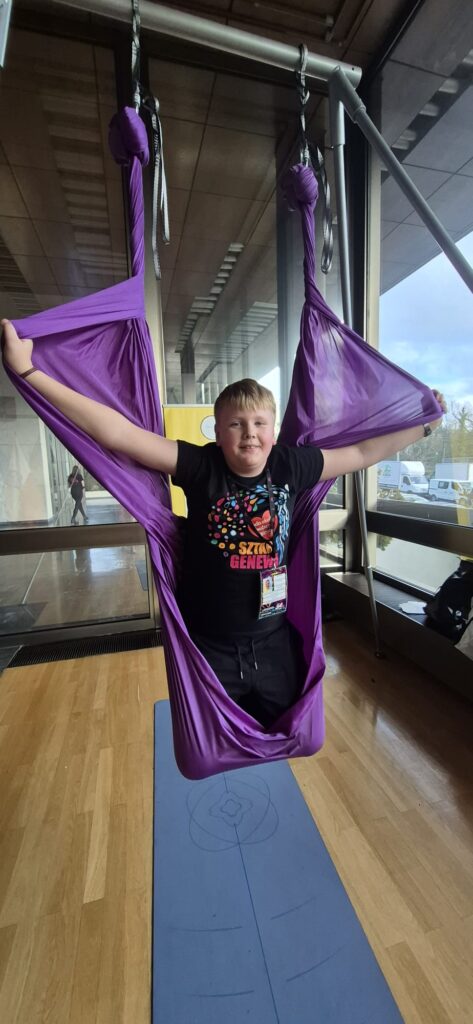
The safety of aerial yoga comes from several important factors:
1. Professional Rigging
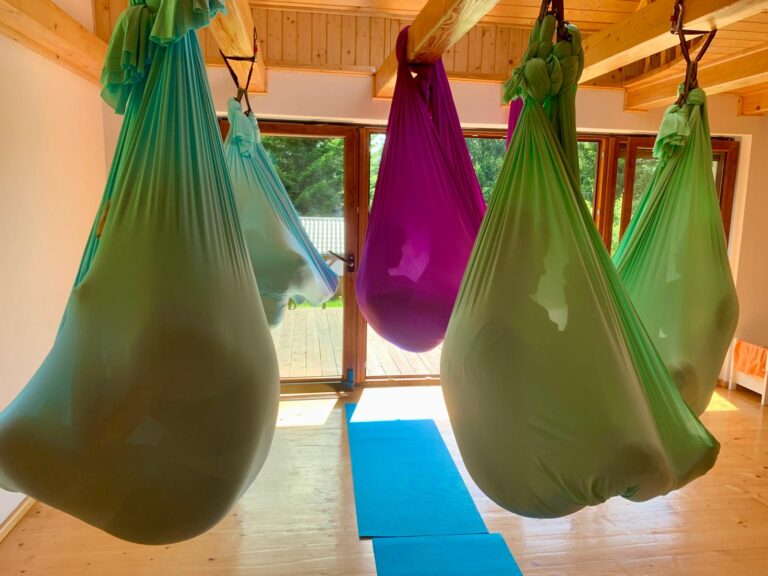
Hammocks are attached to secure ceiling anchors designed to support significant weight.
2. Structured Progression
Beginners learn foundational movements before exploring more advanced positions.
3. Instructor Guidance
A trained instructor helps students adjust alignment and move safely through transitions.
4. Supportive Equipment
The hammock reduces joint pressure and provides assistance during difficult poses.
5. Body Awareness
Students develop better proprioception—your body’s sense of position and movement.
These elements make aerial yoga both supportive and empowering, rather than risky.
Who Should Take Extra Precautions?
While aerial yoga is safe for most people, some conditions require consultation with a professional before participating.
These may include:
- recent surgeries
- glaucoma
- uncontrolled high blood pressure
- pregnancy
- severe vertigo
A responsible instructor will always ask about health considerations and offer modifications where needed.
The Real Benefit: Confidence in Movement
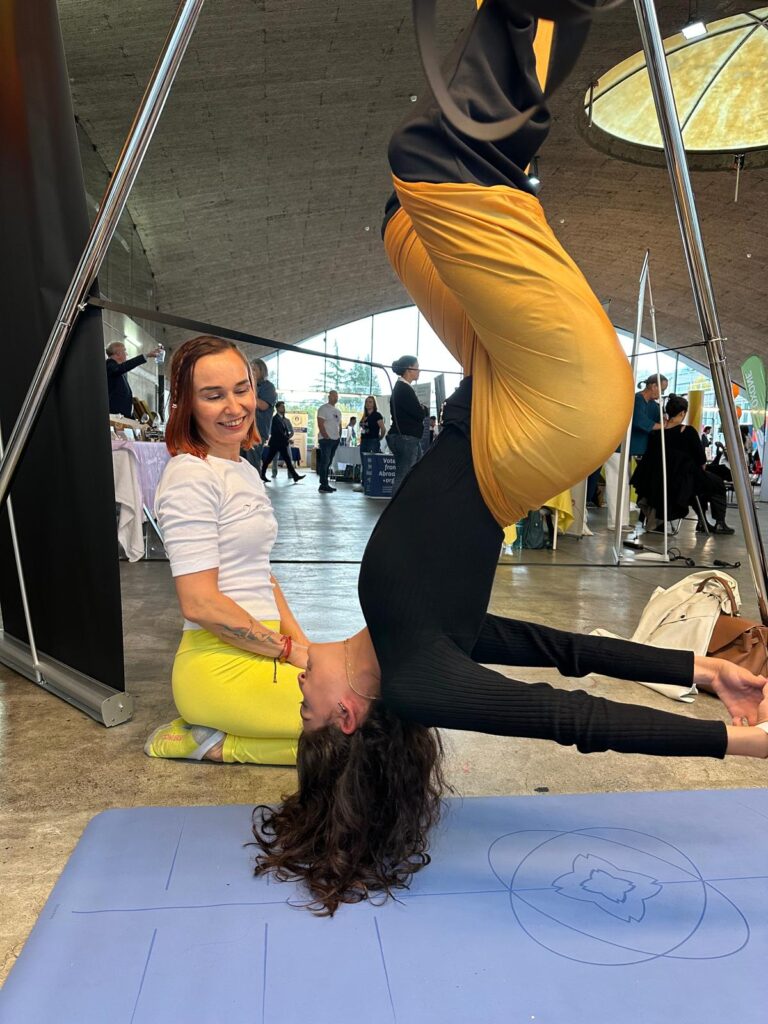
Beyond safety, aerial yoga offers something many people are missing in modern fitness:
a sense of play.
The gentle support of the hammock helps students explore movement without fear of failure. Many beginners quickly discover that poses they thought were impossible suddenly become achievable.
Instead of focusing on limitations, aerial yoga encourages curiosity, exploration, and trust in your body.
And that mindset is one of the most powerful tools for preventing injury.
Final Thoughts
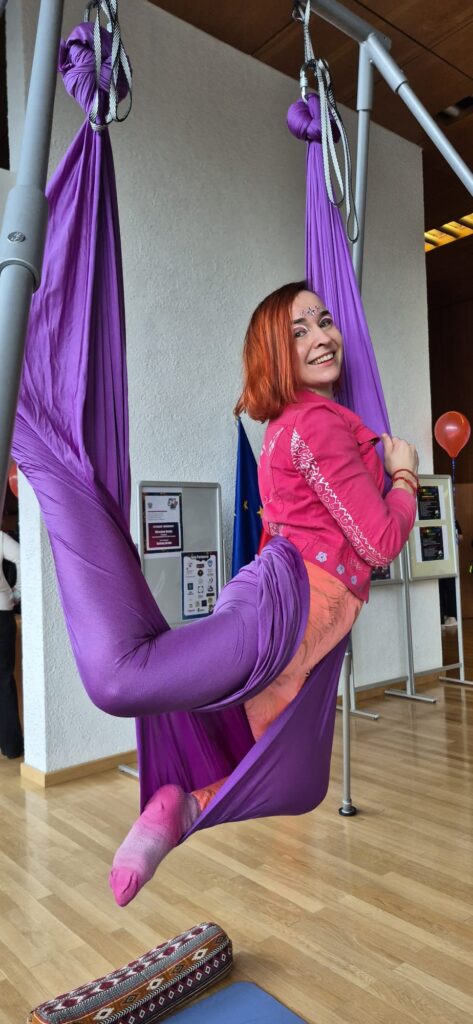
Aerial yoga may look dramatic at first glance, but when practiced in a safe environment with proper instruction, it can be one of the most supportive and accessible forms of movement.
The hammock isn’t a risk — it’s a tool.
It helps decompress the spine, support the joints, and guide the body through movement in ways that feel both challenging and safe.
If you’ve ever been curious but hesitant, remember:
You don’t need to be flexible.
You don’t need to be strong.
You just need to be willing to try.
And you might discover that the air is actually a very safe place to move.