What Is Fascia and Why It’s Essential for Your Wellbeing (And Why Aerial Yoga Is Perfect for Fascia Health)
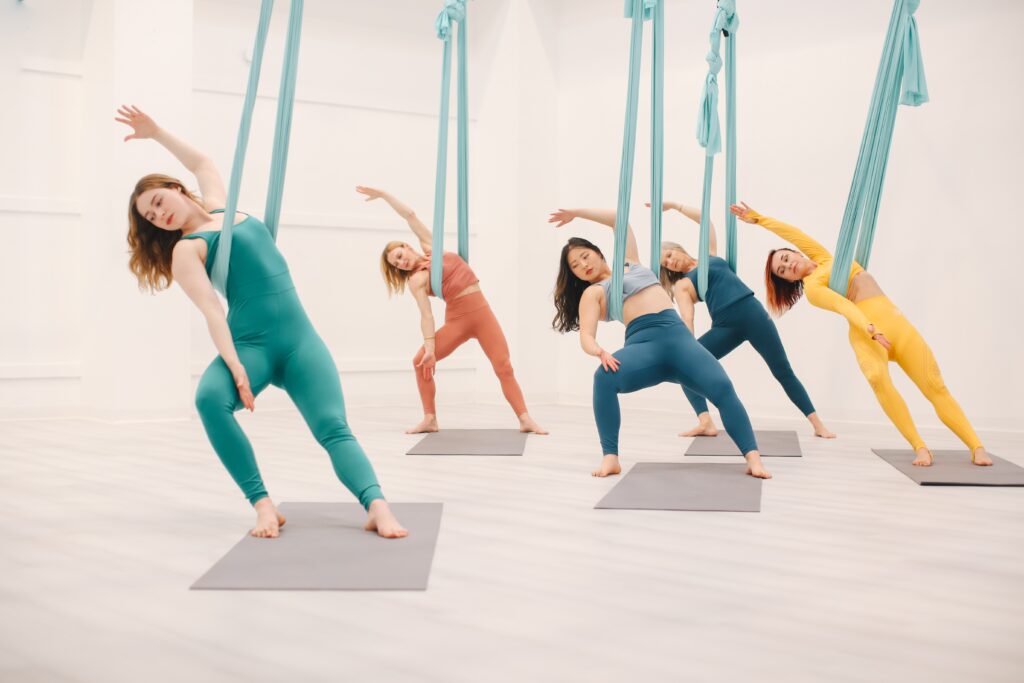
If you’ve ever felt stiff, tight, or “blocked” in your body—even though you stretch regularly—the missing link might be fascia.
Fascia is one of the most important (and most overlooked) systems in the human body. It affects how we move, how we feel, how we manage stress, and even how we experience emotions. Understanding fascia—and learning how to care for it – can be a true game-changer for your physical and mental wellbeing.
What Is Fascia?
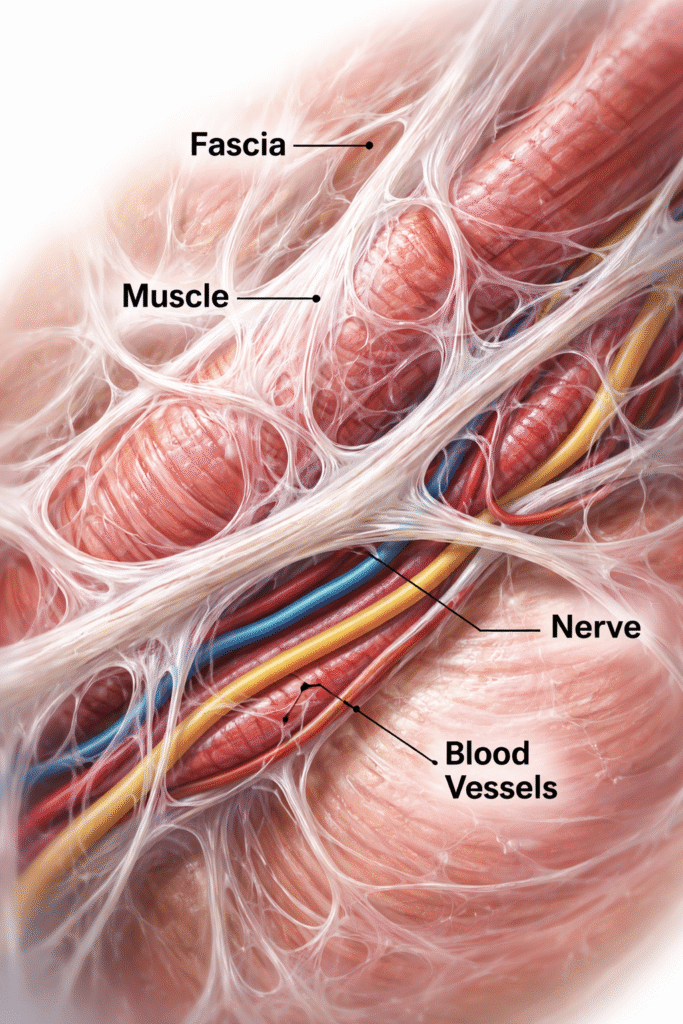
Fascia is a continuous web of connective tissue that surrounds and connects everything in your body: muscles, bones, organs, nerves, and blood vessels.
Think of fascia as a three-dimensional internal bodysuit that gives structure, support, and communication to the entire body. It is not just something that “wraps” muscles—it connects the whole system into one intelligent, responsive unit.
Fascia is made mostly of collagen, elastin, and water, which allows it to be both
strong and elastic.
Why Fascia Is So Important for Wellbeing
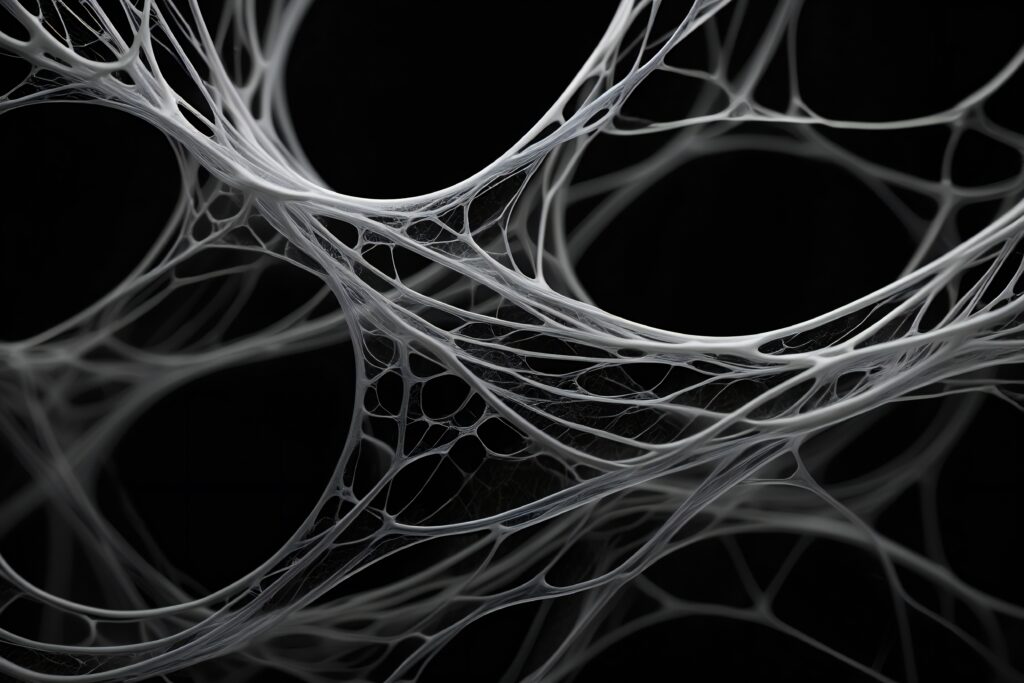
Healthy fascia is:
- Hydrated
- Elastic
- Responsive
- Smooth and gliding
Unhealthy fascia, on the other hand, can become:
- Dehydrated
- Sticky or rigid
- Painful
- Restricted
When fascia loses its elasticity and hydration, it can lead to:
- Chronic pain and stiffness
- Reduced mobility and flexibility
- Poor posture
- Fatigue
- Slower recovery after exercise
- Increased stress and nervous system dysregulation
Fascia and the Nervous System

Fascia contains more sensory receptors than muscles, which means it plays a major role in how your nervous system perceives safety, tension, and relaxation.
This is why fascia work is not just physical—it’s deeply connected to:
- Stress regulation
- Emotional release
- Body awareness
- Mind–body connection
When fascia softens and rehydrates, the nervous system often follows.
Fascia, Stress, and Modern Life
Modern lifestyles are particularly hard on fascia:
- Long hours of sitting
- Repetitive movements
- Chronic stress
- Shallow breathing
- Lack of varied, three-dimensional movement
Stress causes fascia to contract and densify, creating patterns of holding in the body. Over time, this can manifest as pain, tightness, or a constant feeling of tension—even at rest.
This is where intentional, intelligent movement becomes essential.
Why Aerial Yoga Is Perfect for Fascia Health
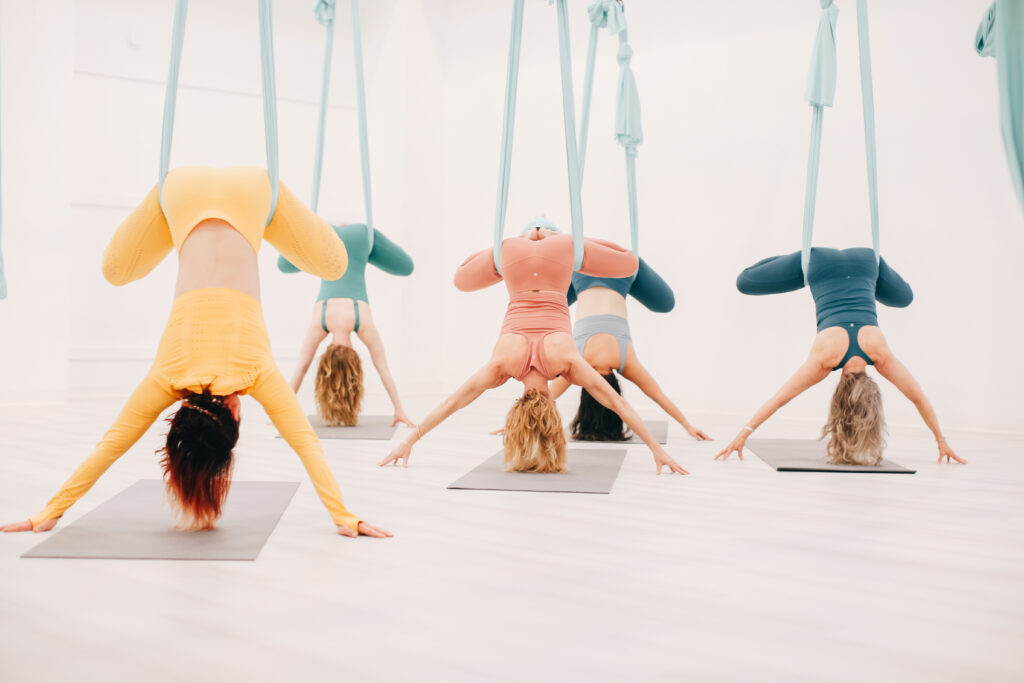
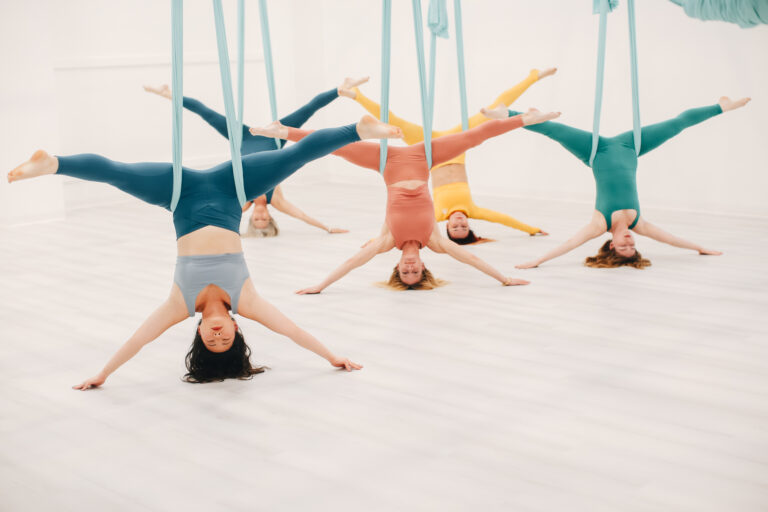
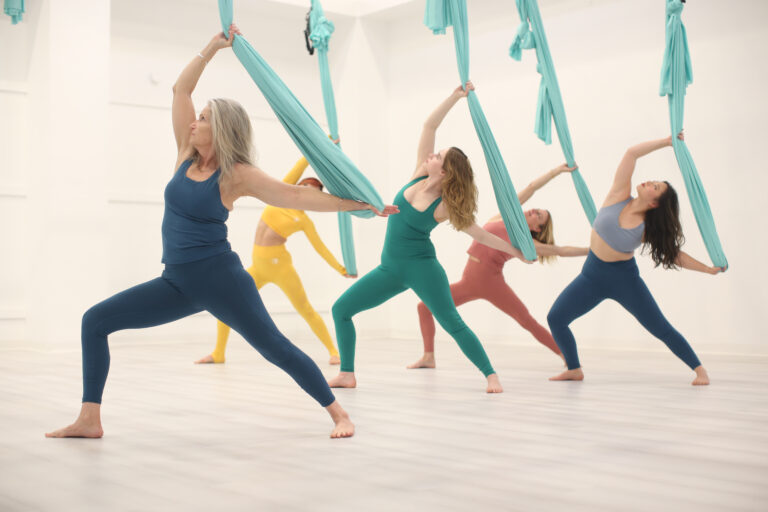
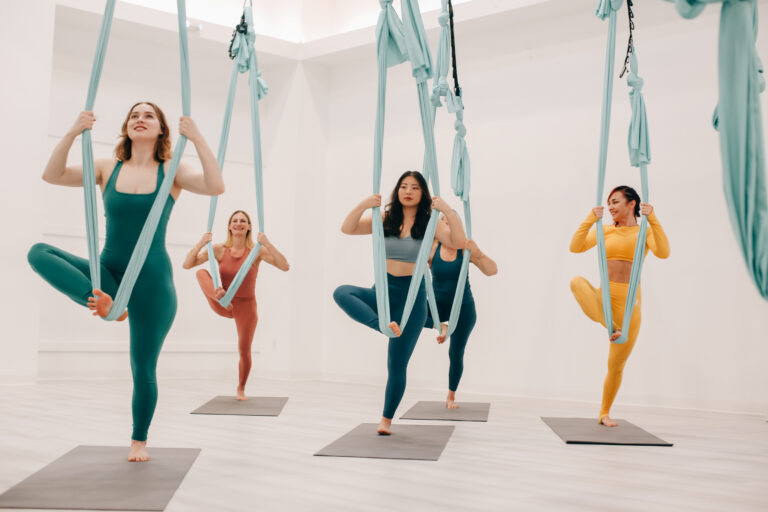
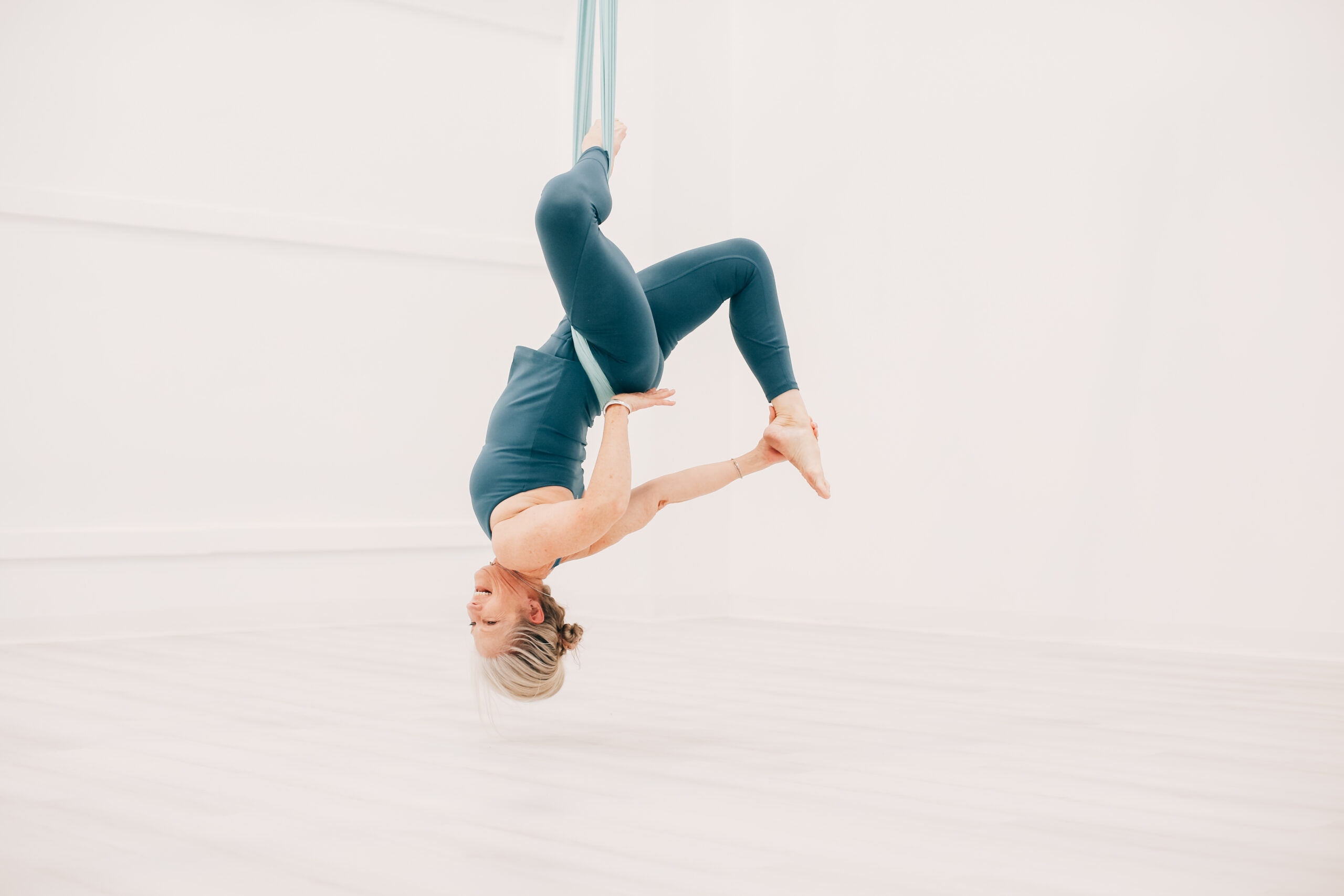
Aerial yoga is one of the most effective and enjoyable ways to support fascia health because it works with the body in all directions, not just forward and backward.
1. Gentle Traction and Decompression
The hammock allows for passive and active traction, gently decompressing:
- the spine
- joints
- connective tissue chains
This creates space in the fascial network and helps restore natural elasticity without force.
2. Three-Dimensional Movement
Fascia thrives on variety and spirals, not repetitive linear motion.
Aerial yoga encourages:
- circular movements
- spirals
- side bending
- inversion
- suspension
All of these stimulate fascial hydration and adaptability.
3. Hydration of Fascial Tissue
Fascia is largely made of water. When we move slowly, rhythmically, and with mindful loading (as in aerial yoga), we help fascia reabsorb fluid, making it more supple and resilient.
This is why many people feel lighter, taller, and freer after an aerial yoga class.
4. Support for the Nervous System
The hammock provides a feeling of support and safety, which helps down-regulate the nervous system.
This is especially powerful for:
- stress relief
- anxiety reduction
- burnout recovery
- emotional release stored in the body
When the nervous system relaxes, fascia can soften.
5. Strength Without Compression
Unlike high-impact or overly rigid training, aerial yoga builds strength without compressing the fascia.
The result:
- functional strength
- joint-friendly movement
- improved body awareness
- reduced risk of injury
Fascia, Longevity, and Sustainable Movement
Caring for your fascia is not about pushing harder—it’s about moving smarter.
Practices like aerial yoga support:
- long-term mobility
- pain-free movement
- emotional balance
- graceful aging
- sustainable strength
This makes aerial yoga an ideal practice not only for flexibility, but for whole-system wellbeing.
Final Thoughts

Fascia is the silent architect of your body. When it’s healthy, movement feels effortless and the mind feels clearer. When it’s neglected, the body whispers—and eventually shouts—through pain and restriction.
Aerial yoga offers a unique, intelligent, and deeply nourishing way to care for your fascia, reconnect with your body, and restore balance from the inside out.
If you’re looking for a practice that supports both your physical structure and your nervous system, aerial yoga is not just beautiful—it’s profoundly functional.